
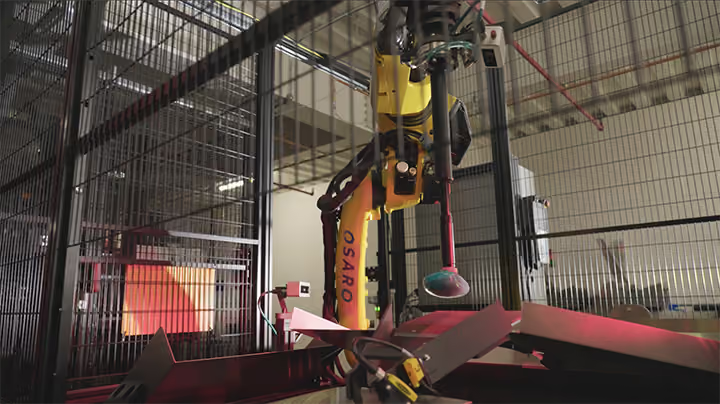
Bagging is often one of the last manual steps left in an otherwise automated warehouse. As order volumes increase and SKU variability grows, that final handoff becomes harder to staff, harder to standardize, and harder to scale. It is also a common source of error: manual bagging is where mislabeled parcels, wrong-item bags, and inconsistent sealing tend to creep in, and those mistakes carry real cost once an order is already out the door.
Robotic bagging systems are designed to solve that problem. Understanding how they work, and why some approaches perform better than others, matters when evaluating automation that needs to operate reliably in real warehouse conditions.
Short answer: How do robotic bagging systems work?
Robotic bagging systems work by using machine vision, robotic arms, and intelligent software to automatically place items into bags and seal them for shipment. The system identifies each item, prepares a bag, inserts the product, and completes sealing without manual handling. It adapts in real time to changes in product size, orientation, and flow.
What is a robotic bagging system?
A robotic bagging system automates the process of placing items into bags, most commonly polybags, using industrial robots instead of manual labor. These systems are widely used in e-commerce fulfillment, parcel distribution, and warehouse operations where speed, accuracy, and consistency are critical.
Modern solutions, such as OSARO’s robotic bagging systems, are built to handle real-world variability. They do not rely on rigid tooling or highly controlled product presentation. This makes them better suited for mixed SKUs and dynamic warehouse environments.
What a robotic bagging system must do every cycle
In practice, robotic bagging is less about following a fixed sequence and more about meeting operational requirements consistently.
Every cycle, the system needs to:
- Identify the incoming item and reconcile it with order data from the WMS, so the right product is matched to the right shipping label
- Handle it reliably, regardless of orientation
- Manage flexible packaging without jams or misfeeds
- Maintain throughput as upstream conditions change
Systems that struggle with any of these steps quickly become bottlenecks.
Core components of a robotic bagging system
While implementations vary, most robotic bagging systems rely on the same foundational components. How those components are designed and integrated makes a significant difference in performance. In higher-volume operations, these components often sit downstream of a consolidation system that groups items into single orders before they reach the bagger.
n multi-item operations, a consolidation system brings the components of an order together before bagging. Getting consolidation right upstream keeps the bagging cell fed with clean, complete orders and prevents partial or mixed shipments.
Machine vision
Vision systems detect incoming items and determine how they can be grasped and bagged. This includes locating the item, understanding its orientation, and accounting for variability in size or shape.
Effective vision is what allows robotic bagging systems to work with mixed SKUs instead of requiring tightly controlled presentation.
Robotic manipulation
Industrial robotic arms perform the physical handling: picking items, positioning them, and placing products into the bag. Because bags are flexible and items are rarely perfectly aligned, motion planning must adapt continuously rather than follow fixed paths.
This is where the design of the underlying models matters. OSARO's AutoModel provides a path for handling the highest product variability in the industry, without requiring a controlled presentation for every new SKU. Object modeling gives the system orientation control, so items can be placed into the bag in a known, repeatable pose. Combined, these capabilities let the system be taught more advanced behaviors, such as barcode avoidance during item detection and placement, so labels stay scannable downstream.
Consolidation
In multi-item operations, a consolidation system brings the components of an order together before bagging. Getting consolidation right upstream keeps the bagging cell fed with clean, complete orders and prevents partial or mixed shipments.
Bag handling and sealing
Baggers are set up to run a common bag size, so there is no per-item bag selection. Instead, the system holds the bag open, inserts the item, prints and applies the shipping label, and seals the bag for shipment. Reliability at this stage is critical. Inconsistent bag handling, labeling, or sealing quickly creates downstream issues.
Control software and intelligence
Software coordinates vision input, robotic motion, and bag handling into a single workflow. More advanced systems adjust dynamically based on what the system experiences during operation, rather than relying on static rules.
Why learning approach matters
Some rely on predefined product geometries or frequent manual intervention. This is especially common when vision models need to be retrained or images must be labeled by hand, and it means every new item shape can require setup before the system can handle it.
That approach adds friction over time.
OSARO’s robotic systems take a different path. They use AI models that learn directly from operation, without a human in the loop for image tagging or exception handling. The system is continuously tuning itself as conditions change, such as new products or shifts in upstream flow, so it keeps improving through use. The difference is that this tuning does not require people to do it.
In practice, this leads to faster deployment, lower maintenance overhead, and more consistent performance as operations evolve.
Where robotic bagging systems deliver the most value
Robotic bagging is particularly effective in operations with:
- High SKU variability
- Labor constraints or high turnover
- Demand for consistent throughput
- Tight packaging and accuracy requirements
When deployed correctly, these systems reduce manual touchpoints while improving predictability across the fulfillment process.
Final thoughts
Robotic bagging systems work by combining machine vision, robotic manipulation, and a purpose-built bagger into a coordinated, autonomous process. The most effective systems do more than automate motion. They adapt to variability and continue performing as real-world conditions change.
For teams evaluating robotic bagging, the real question is not whether automation can place items into bags. It is how well the system holds up once it is live.
To learn more about how OSARO approaches robotic bagging, including system capabilities and deployment considerations, you can review the Robotic Bagging data sheet or explore how these systems are deployed in active warehouse environments today.